
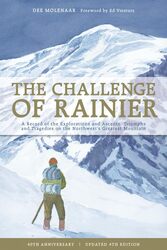
Rating: 7.0/10. Fairly old book about the mountaineering history of Mount Rainier. The first edition was published in 1971, and then it has been updated a few times. It starts with a brief geology of the mountain, noting that it’s a dormant volcano but with some mudflows more recently, and how its glaciers have been…
All Book Reviews
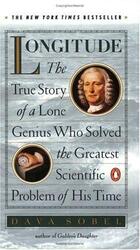
Longitude by Dava Sobel
Rating: 7.8/10. Fairly short book (175 pages) about the marine chronometer, one of the most famous books in the genre of short book about a specific object. It first also lays out the problem of determining longitude: whereas latitude is easy to determine at sea just by observing the position of the sun, longitude requires…
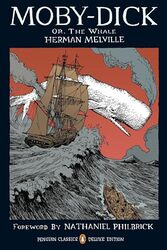
Moby Dick by Herman Melville
Rating: 8.3/10. Fairly long classic American novel set in about 1840, about hunting a whale Moby Dick (the whale’s name, which is the title of the book) – it is quite dense but still doable to read with some help from references. It is broken into over 100 very short chapters, ranging from just one…
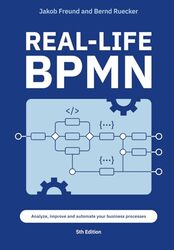
Real-Life BPMN by Jakob Freund and Bernd Ruecker
Rating: 8.4/10. Book written by the co-founders of Camunda about BPMN (leaders of executable workflow engines for the enterprise), with the longest chapter about the semantics and mechanics of the BPMN standard. The rest of the chapters include a brief chapter about DMN; best practices for using it in an organization on strategic/operational levels for…

The Storm on Our Shores by Mark Obmascik
Rating: 8.0/10. Book about the battle of Attu of 1943 in the Aleutian Islands, focusing on the stories of two men who fought on opposite sides. The first part introduces Paul Nobuo Tatsuguchi, a Japanese doctor who was a medical resident and studied in California in the 1930s, and his struggles to become culturally accepted…

The Sunset Limited by Cormac McCarthy
Rating: 7.5/10. A minimalistic novel in screenplay format that has only a dialogue between two characters called Black and White. The setting is that White is a depressed, educated professor who just tried to commit suicide by jumping in front of a train, and he is rescued by Black, a christian ex-convict who takes him…
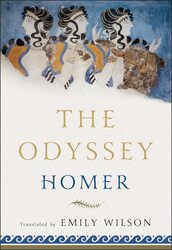
The Odyssey by Homer translated by Emily Wilson
Rating: 8.8/10. An ancient Greek epic poem by Homer, I got this book after seeing Christopher Nolan’s Odyssey movie, which is a fairly accurate rendition (at least of the main characters and events). Overall, I found this much more enjoyable and easier to read than the Iliad, the other great Homeric epic poem, due to…
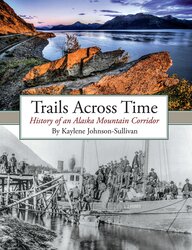
Trails Across Time by Kaylene Johnson-Sullivan
Rating: 7.4/10. Book about the history of the Kenai Peninsula, especially the route from Anchorage to Seward. It has many pictures, is fairly short at around 100 pages, and includes descriptions of notable people who lived in this area in the past, modern-day road trip information, and other facts from that time. Prehistory and geography:…

Gates by Stephen Manes and Paul Andrews
Rating: 8.0/10. Biography of Bill Gates and Microsoft, from the earliest founding days until around 1992, when this book was written. Bill Gates, being the founder of Microsoft, quickly became one of the wealthiest people by making personal computers, and how his both technical ability and business savvy deals made him so successful. Bill Gates…
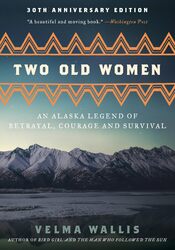
Two Old Women by Velma Wallis
Rating: 7.9/10. A fairly short novella about two old women of the Gwich’in tribe in Northern Alaska, following a folklore tale where the two old women are seen as complaining and the chief decides to leave them behind. The two women are 75 and 80 years old, and rather than sit down and die, they…
VC: An American History by Tom Nicholas
Rating: 7.3/10. Book about the history of venture capital, which has existed in some form for a long time before evolving into its modern form. The earliest form was sponsoring ocean voyagers, before evolving into the current structure for tech ventures. The book explores the evolution of venture capital in different phases and the conditions…
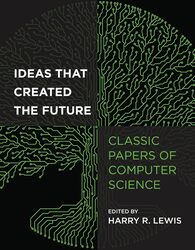
Ideas the Created the Future by Harry R. Lewis
Rating: 8.8/10 Anthology of famous and influential computer science papers from the beginning of the field until 1980, in chronological order. Each one is abridged to the most important sections, with a short introduction about its context and influence, but is otherwise relatively sparse in annotations or explanations. Reading the papers in chronological order, we…